Crypto Chaos: A Tale of Liquidations and Data Discrepancies
Welcome to the Wild World of Crypto Crashes!
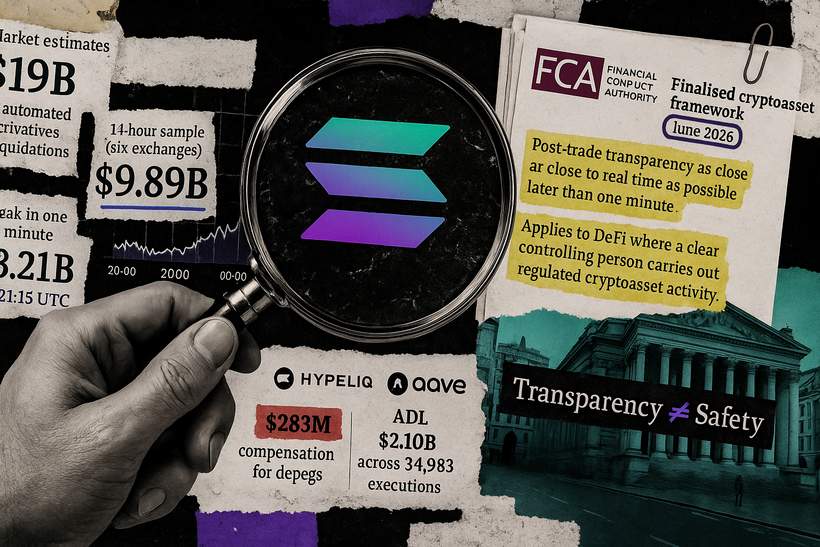
So, picture this: the crypto world is on fire (figuratively speaking, of course) as Solana Research Institute spills the tea on a jaw-dropping $18 billion liquidations spectacle during the notorious crypto crash on October 10, 2025. Yep, you read that right! This melodrama unfolded over a mere 14 hours, with a staggering $3.21 billion evaporating in just one minute. Talk about a crypto rollercoaster!
The Great Liquidation Conundrum
Now, the SRI isn’t just passing around wild claims; they’re pointing fingers at the big, bad centralized venues that crashed and burned while the transparent on-chain finance stood tall, waving its flag. But hold your horses! Things got a bit muddled, as those public records reveal a different story altogether. They hint at some significant hiccups in the Hyperliquid venue and some gnarly oracle delays at Aave, suggesting that these unfortunate events might have been spurred on by Binance’s own internal pricing shenanigans.
What in the World is Auto-Deleveraging?
Let’s break it down. Auto-deleveraging (ADL), for those who aren’t crypto-savvy, is like the emergency parachute for traders. When the market takes a nosedive, rather than letting profitable traders hang on for dear life, ADL steps in and dramatically scales down their positions to keep the house from burning down. This is different from the routine liquidations, which boot traders out when their collateral value takes a dive.
Crunching the Numbers
The SRI put the spotlight on that monumental $18 billion figure but then dropped a tiny bomb — there’s no clear way to reconcile it with Amberdata’s lower estimate of $9.89 billion. It’s like solving a puzzle with missing pieces, folks! Meanwhile, ESMA chimes in with their own figures, reporting around $19 billion in automated derivatives liquidations for that dreaded day.
Binance’s Trouble in Paradise
Now, if you’re thinking this is all just a minor technical glitch, think again! Binance’s own postmortem reveals its engines ran smoothly while some modules decided to take an extended coffee break. After 21:18 UTC, internal transfers limped along while some collateral assets went rogue. Talk about a party foul! They even had to dish out $283 million in compensation for users caught in the chaotic crossfire. Yikes!
The Transparency Tango
And what about the transparency, you ask? While Binance made some noise about their internal pricing leading to collateral value plummeting faster than a lead balloon, they didn’t provide solid numbers for the ADL event. So, trying to pin down the dominant failure from this crypto catastrophe is like nailing Jello to a wall. You just can’t do it!
The Aftermath: Learning from the Crash
Hyperliquid and Aave pull different levers when it comes to their risk management strategies, leading to a somewhat puzzling variety of loss outcomes. Public records have revealed some juicy bits of data, making it easier to dissect what went wrong. But there’s still a lot to untangle from this jigsaw of delays, bad debts, and oracle issues.
What’s Next?
With regulators now sitting at the helm, the hope is to make future trading platforms squeaky clean and transparent, so that we can dodge another crash of this magnitude. The Solana Research Institute believes focusing on the observability gaps could help regulators tell the difference between a normal market mishap and a total venue meltdown.
In Conclusion
So, in the wild world of crypto, where fortunes can rise and fall faster than a game of musical chairs, transparency is king. Let’s hope that regulators step up their game to prevent another fabulous trainwreck like the one we all just witnessed. Until next time, keep your wallets close and your trading fingers ready!