DAOs: The Great Crypto Tug-of-War
DAOs and Their Dilemmas
Welcome to the wild world of DAOs, where crypto protocols find themselves in a constant tug-of-war between being all about the code and having a handy emergency brake to stop things from going haywire. You see, a DAO, or Decentralized Autonomous Organization (yes, it sounds fancy), operates like an online republic. Picture a virtual town hall where folks with COMP tokens gather, debate proposals, and—most importantly—vote. It’s like a high-stakes game of poker, but instead of chips, you’re betting your stake in governance.
The $24 Million Proposal That Shook Things Up
Now, let’s get into the juicy stuff. Back in the hot summer of July 2024, there was a proposal that nearly made the crypto world do a double-take. This proposal aimed to yank a whopping 499,000 COMP—valued at around $24 million at the time—into a yield-bearing vehicle controlled by a select group of voters. Sounds like a dream deal, right? Well, two earlier attempts had flopped, so it was all eyes on version three, which was teetering on the edge of disaster.
But then, in a dramatic last-minute twist, a flurry of votes came pouring in—563,591 of them, to be exact! That’s 82% of the total support, folks! The final votes landed just eight short minutes before the deadline, and somehow, the proposal squeaked through with a score of 682,191 to 633,636. Cue the gasps!
The Code Worked, But Not Without Controversy
While the code ran smoother than a well-oiled machine, the aftermath was anything but smooth sailing. The whole ordeal raised eyebrows and sparked debates, but the bigger issue was that Compound didn’t have an emergency stop button to pause the software when needed. The wallets had rallied enough COMP and delegated their powers just in time, making it a perfect storm for what some called a treasury raid. Yikes!
In response, Compound ended up canceling the allocation (phew!) and slapped on a veto role to reel things in, adding a sort of brakes to this whole automatic token-holder operation. And therein lies the conundrum: most defenses against dodgy or hasty votes lean toward giving someone—usually the big fish—more control over the governance process.
Research Uncovers Voting Power Concentration
Fast-forward a bit, and researchers from the Max Planck Institute and Vrije Universiteit Amsterdam decided to dive deeper into the DAO rabbit hole. They took a hard look at 48 major Ethereum DAOs and found some intriguing trends. For starters, calling a governance token a ‘vote’ is a bit misleading. Depending on the DAO, holders might find themselves jumping through hoops—registering wallets, locking up tokens, and shifting funds—before they can even cast a vote.
Proposal Madness
Let’s not forget about the proposal process itself. Getting a proposal on the table is no walk in the park; a hopeful proposer needs a hefty stack of tokens or the backing of some powerful delegates. And don’t get me started on the off-chain polls—those can feel like popularity contests before the real vote goes down on the blockchain.
The Power Players and Their Strategies
The researchers discovered that 24 DAOs utilized on-chain voting while the other half leaned toward off-chain methods. Uniswap, for instance, highlighted how different voter bases emerged within the same organization. More wallets dipped into the free off-chain polls, while the hefty hitters showed up to flex their muscles during the paid on-chain phases.
It’s a funny paradox—thousands of token holders, yet only a few addresses seem to control the proposal, votes, and execution. By the time the results come out, the rules have already chosen the players!
Custody Conundrums and Centralization Woes
Here’s where it gets even stickier. Many DAOs have their tokens tucked away in treasury contracts, and original investors might hold portions of tokens that haven’t even vested yet. This means that registration often separates accessible tokens from those that are eligible to vote, leaving a lot of power concentrated in the hands of a few.
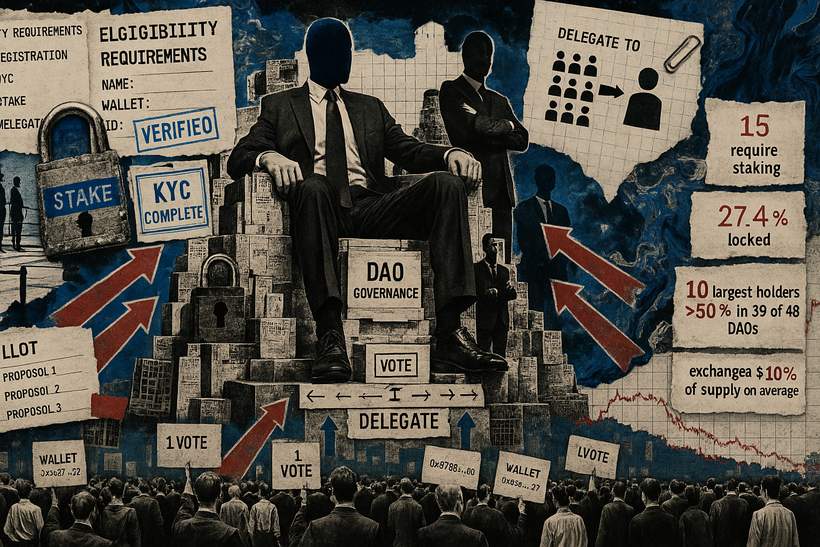
Out of the 48 DAOs studied, 36 required some sort of registration, but only four had more than half of their total supply actually registered. The average registered share was a paltry 21%. Most of the unregistered supply belonged to users whose coins were stashed away on exchanges or relegated to DeFi protocols.
The Weird Politics of Custodians
In fact, in some cases, intermediary wallets held more tokens than the entire registered electorate! Imagine that—an exchange wallet representing thousands of users voting with one mega balance. If that exchange votes, it turns into a political titan. But if they don’t? Well, say goodbye to the governance rights that customers thought they purchased!
The Evolution of Voting Mechanisms
Now, let’s unravel the mystery of staking. While it makes it pricier to build up voting power, it presents new vulnerabilities. An attacker can snag a large position in tokens, support a favorable proposal, and then sell out right after the vote. Locking tokens adds financial tension, however, leaving investors more exposed to the outcomes.
Fifteen DAOs had staking requirements, with an average of 27.4% of tokens locked away. Some made a game out of waiting—one to two weeks to withdraw, while others offered extra power for those willing to lock their tokens for years! This system rewards those with patience while turning their liquid wealth into a ticket to influence.
The Future of DAOs
The landscape of governance continues to evolve, pushing crypto enthusiasts to adopt middleman services to retain influence without sacrificing the ability to trade. These options maintain significant voting blocs while allowing for trading flexibility.
In the raucous world of crypto, the biggest holders often end up controlling voting power. In fact, the top ten holders commanded more than half of the voting power across 39 of the 48 DAOs! Meanwhile, delegated voting seems to have a tighter grip than direct participation.
The Conclusion
So, what’s the takeaway from our great crypto saga? While registration protects treasury balances and staking ramps up the cost for attackers, delegating power allows passive holders a voice through active participants. But when you put all these aspects together, it’s often the wealthiest, most engaged, and technically savvy folks who hold the reins.
In the grand scheme of things, the notion of a governance attack rears its ugly head. Researchers classified many incidents as attacks that might’ve been thwarted by different mechanisms, showing just how intricate the DAO dance can be.
As we plunge deeper into the wild west of digital governance, it’s clear that decentralization packs a lot more complexity than just who holds the tokens. Future governance reports will need to dig into how much of the total supply can actually vote, how power is held, and who can set proposals in motion—or stop them in their tracks. As we wrap up our crypto caper, one thing is for sure: there’s always more to uncover in the realm of DAOs!