The Sneaky Side of DeFi: How the ‘Buy, Borrow, Die’ Tax Trade Backfires
Introduction
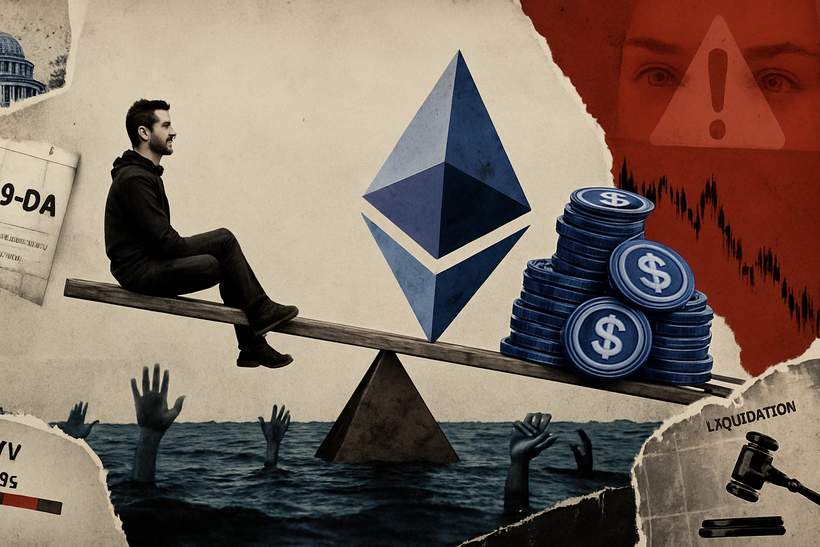
Picture this: someone buys ETH for a cool $1,000, watches it skyrocket to $4,000, and now they’re itching to pocket $1,000. The typical move? Sell a quarter of that ETH, cash in, and deal with a $750 capital gain tax because, you know, Uncle Sam’s got to keep the lights on. But wait! In the fantastical world of DeFi, there’s a twist that would make a telenovela jealous.
The DeFi Dilemma
What if, instead, our savvy investor keeps all their ETH locked away in a lending protocol? That way, they can use it as collateral to borrow $1,000 in a stablecoin—completely dodging that pesky tax hit. Suddenly, they’ve got cash flow without selling their beloved crypto. Sounds perfect, right? Well, that’s where our story takes a turn.
The Risky Business
Initially, borrowing against $1,000 of debt backed by $4,000 worth of ETH seems like a smart plan. But if ETH takes a nosedive to $2,000, uh-oh! That loan-to-value ratio shoots up to 50%, and the odds of liquidation start to rear their ugly heads. If the collateral drops below a certain threshold, a liquidator swoops in to redeem part of the loan and snags some of that ETH at a bargain. Ouch!
The Hidden Costs
While our borrower might have delayed their taxable event, they unknowingly just transferred a block of risk to the lending pool—which, spoiler alert, is funded by other crypto enthusiasts who might only know them as a string of numbers. Talk about an awkward blind date!
Researchers on the Case
A trio of brainiacs—Lisa De Simone from the University of Texas, Peiyi Jin from the National University of Singapore, and Daniel Rabetti—decided to dig into these shenanigans. They took a hard look at Venus, a lending protocol on BNB Smart Chain, which allows users to pledge crypto and borrow other tokens. From 13 million transactions that spanned almost two years, they zeroed in on the drama behind the scenes.
The Default Dilemma
Brace yourself! A DeFi default doesn’t look like a run-of-the-mill missed mortgage payment. Instead, they figured you were in trouble when your loan lingered above Venus’s 60% loan-to-value limit for over a week without any extra borrowing or collateral. Sounds like a nightmare, right? In total, they counted a whopping $133.34 million in defaulted debt. The suspense is real!
The Tax Game
The traditional wisdom behind this strategy is simple: buy an asset, watch it rise, and borrow against it to avoid realizing gains. This cleverly keeps the capital gains tax at bay for years while giving your heirs a hot potato they can inherit—without those pesky tax headaches still attached. Typically, this game was for the wealthy elite, as banks liked to lend only to clients with shiny financial portfolios.
The DeFi Revolution
But DeFi flipped the script. Here, it’s all automated—no charming loan officers needed. Just a robot peeking into your digital wallet and following the same rules for everyone. It’s like a ‘one size fits none’ arrangement where overcollateralization becomes the name of the game, ensuring borrowers pledge more than they borrow.
Risks and Rewards
Under Venus’s terms, if you start with $10,000 in collateral, you might take out $6,000 as debt. Borrow all of it, and you’re skating on thin ice! If collateral value falls, a liquidator can come into play to settle part of the debt, taking what’s left behind. Just be careful—market volatility and congestion can impact timing, and no one likes a slow sell-off.
Tax Factors at Play
Now throw tax incentives into the mix. Borrowers desperate to avoid realizing gains might keep that loan longer, especially when waiting a bit could mean climbing down to a lower capital gains tax bracket. And the icing on this cake is the stablecoin magic! Borrowing USDT or USDC gives traders a dollar-pegged power-up without touching their prized crypto.
The IRS Are Watching You
After the Infrastructure Investment and Jobs Act kicked in, the playing field changed. Now brokers handling digital assets had stricter reporting rules. This made US traders feel the heat and change their behavior. Our researchers had to untangle all these webs of transactions and discover which wallets were linked to US users, and it’s not as easy as it sounds.
Trading Behavior Shifts
Post-law enactment, US-linked borrowers dramatically slowed down their trading—by about 24.5% compared to international folks! This decline seeped deeper for those with stablecoin debt, as they had the flexibility without the need to trade. Our researchers even estimated that US borrowers deferred about $3,357.42 in capital-gains tax per year. This is one hefty number!
The Great Default Risk
The final kicker? If active borrowers stall on trading, it can lead to risky loans lingering in limbo. A junk account might burst into default territory if loans aren’t attended to—vulnerability galore! They discovered that a 1% uptick in tax-induced illiquidity spurred an 11.2% rise in default accounts. Yikes!
Conclusion
Even automated systems haven’t wiped away the human motives behind loans—because those tax burdens, sentimental attachments to assets, and sell reluctance linger on in the code. When you take a private banking trick and pour it into a public blockchain, you unleash a Pandora’s box of shared financial risks that could splash back onto everyone funded in that pool. So, tread carefully in the DeFi waters! Who knew taxes could be so entertaining?