Why is Solana’s Value Sliding Even with ETF Buzz and Activity?
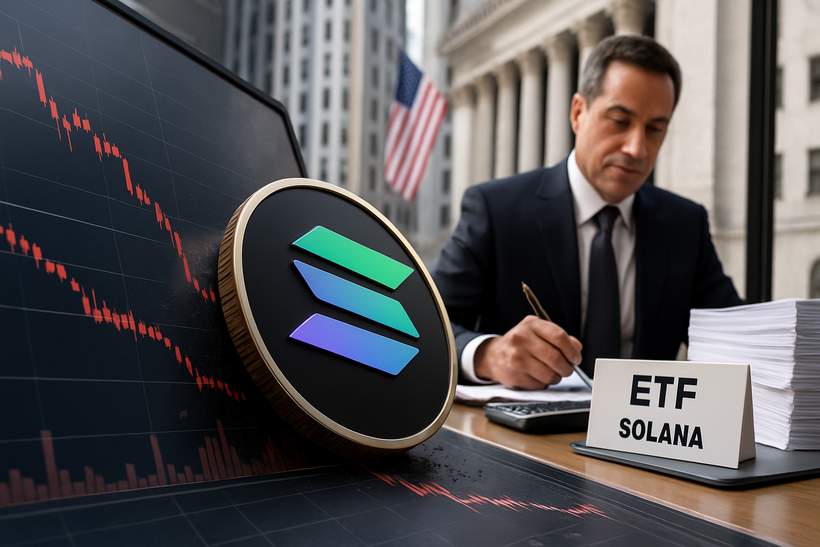
What’s Happening with Solana?
So, here’s the scoop: Solana’s spot ETF assets under management (AUM) just hit the $1 billion mark. Can you believe that? And May saw a whopping $115.3 million in net inflows – the best it’s done all year! Meanwhile, the market cap for tokenized real-world assets reached around $2.8 billion, stablecoin supply skyrocketed past $16.4 billion, and perpetual contracts racked up a total volume of $64.6 billion. Dominate much? Solana accounted for a staggering 97% of the total on-chain trading volume in tokenized equities.
So Why Is Solana Taking a Dive?
Given all this juicy activity, why on earth is Solana’s price slipping? Currently, SOL is hanging around $63. According to Jake Kennis, a senior research analyst at Nansen, the disconnect between activity and Solana’s value comes down to one simple truth: more activity doesn’t necessarily mean more value for SOL holders.
Money Talks, But Not for Everyone
When we see fees, stablecoin flows, and those juicy tokenized equity volumes, it’s worth noting that the benefits typically flow to validators, platforms, and market makers before trickling down to us good ol’ SOL holders. With Solana’s fee structure, it seems like the correlation between network usage and SOL value capture isn’t as strong as we’d like to think.
Half the fees from Solana go to burning tokens, while the other half rewards block producers. But during peak times, those priority fees go straight to validators, leaving little for the burn. So, if the network is buzzing, most of the cash goes to validators, and the burn pretty much stagnates!
Is There a Design Flaw?
The latest chatter suggests that even at its busiest, Solana is only burning around 648 SOL a day. With the network processing billions day in and day out, that feels like a little tweak in the design. Users can shuffle around $16 billion in stablecoins while just keeping the bare minimum SOL for transaction fees. That leaves equity trading profits seeping into the pockets of traders and platforms rather than landing in SOL holders’ wallets.
The Bigger Picture
Now, let’s talk prices, shall we? Kennis explains that the drop from the $76-$98 range down to the $60s is largely due to some macroeconomic risk factors affecting high-beta assets like SOL. It seems like SOL is facing some serious pricing pressures from the wider market, and this isn’t just a Solana-specific issue, as Bitcoin is feeling similarly trapped around $61,500.
New IPOs and Market Dynamics
Ryan Day, the CMO of Solstice, pointed out that the upcoming SpaceX IPO is estimated to bag a cool valuation of around $1.75 trillion! Yep, you heard that right, and they’re expecting to bring in at least $75 billion from this venture. Retail investors are set to score as much as 30% of those shares. When capital like this shifts around, it puts pressure on risk assets across the board, including crypto.
Why the Fuss About Inflation?
Furthermore, across the longer term, the gap between what SOL is capturing value-wise and the actual activity is an issue. Day also emphasizes that there’s a structural worry with Solana’s tokenomics, which boasts an initial inflation rate of 8%, tapering down to 1.5% in the long run. If we keep up with the current rates of inflation, it could take us about 5.7 years to reach terminal inflation.
Don’t Judge a Chain By Its Memes
As for Solana’s not-so-glamorous memecoin reputation thanks to Pump.fun, Day highlights that every big chain has chased the same meme-crazy cycles. So why single out Solana? It’s just the crypto world’s wild rollercoaster, folks!
What’s Next for Solana?
Reform proposals are being tossed around to tackle this value-capture gap the market seems to be pricing in. One proposed plan, SIMD-0550, aims to boost Solana’s tokenomics by doubling the annual disinflation rate from 15% to 30%, which could cut the time to reach that 1.5% terminal inflation rate in half.
If these reforms get the green light, we could be looking at a real turnaround for SOL, as they reduce future emissions and enhance the burn per activity unit. But there’s a lot of uncertainty surrounding these changes. It’s an open debate among Solana’s community about how to address supply and burn issues.
Final Thoughts
In a nutshell, when we look at all the activity Solana’s raking in with stablecoins and equities, it’s a bit paradoxical that SOL isn’t feeling the love. For SOL to capture the benefits of what the network is evolving into, that’s what the market is really waiting for. So, keep an eye on Solana; it’s like that cool kid at school who sometimes forgets their homework – full of potential but still figuring things out!