The Wild West of DeFi: Hyperliquid’s Bold Move in Washington
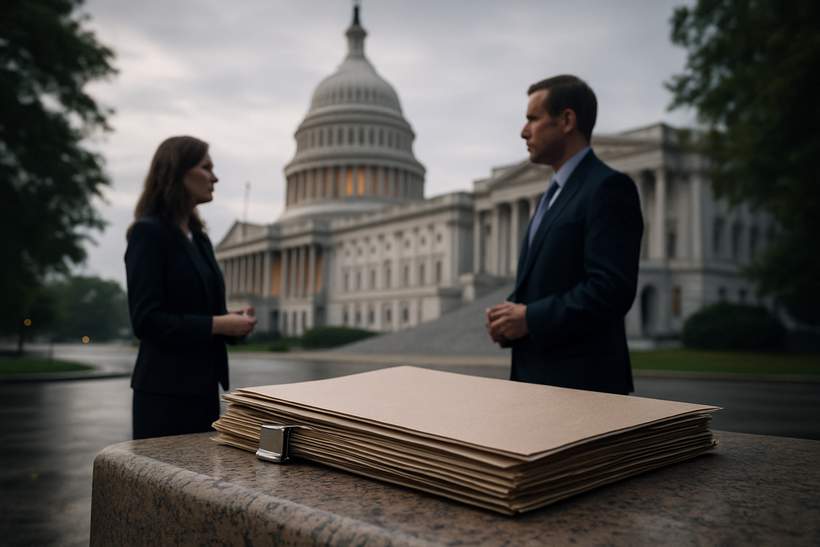
Welcome to the Wild West of Finance!
So, Hyperliquid has kicked off a new chapter in the world of decentralized finance (DeFi) by planting its flag in Washington, D.C., on February 18. With a cool $28 million worth of HYPE tokens at play, this isn’t your average crypto operation. Led by Jake Chervinsky, a legit crypto lawyer who’s been busy making waves on Capitol Hill, Hyperliquid isn’t just casting ballots; it’s rewriting the rules of the game.
What’s Cooking at the Hyperliquid Policy Center?
Think of the Hyperliquid Policy Center as the superhero of the crypto world – a non-profit with a mission to shape the future of decentralized finance and perpetual derivatives. It’s not just about hiring lobbyists; this is a whole new ballgame where the native token is literally paying for a plush D.C. presence. Talk about innovative funding!
Regulation – The New Battleground
But hold your horses! This move is more than just a fancy office with a view. It’s a signal that the times are changing. The days of DeFi simply dodging regulations are fading into obscurity. Now, the tussle is over derivatives, and let’s face it, U.S. regulators are still scratching their heads over perpetual futures, which just happen to be the hottest trend in on-chain action.
Perpetual Futures: The Good, The Bad, and the Ugly
Hyperliquid’s cranking up the numbers with a jaw-dropping $256 billion in perpetual futures volume over just the last month. And while they’re raking in the dough with over $5 billion in open interest, it’s clear that wherever there’s big business, there’s bound to be scrutiny. The UK has clamped down on retail crypto derivatives but is easing up elsewhere, which feels about as clear as mud.
In the U.S., though, the CFTC is flexing its muscles with enforcement actions against players like bZeroX and Ooki DAO for offering illegal off-exchange trading. It seems that perps (yup, that’s what we’re calling perpetuals) have taken over the crypto derivative scene, claiming about 75% of the market—mainly because the rules at home are as fuzzy as your grandma’s old carpet.
Making Sense of Perps
Perpetuals are a bit like that friend who never knows when to leave the party. They don’t expire and rely on continuous funding rates instead of those boring settlement mechanics. This setup tends to make regulators raise an eyebrow or two, as perps don’t fit neatly into the existing commodity futures statutes. Chervinsky himself noted that perps offer “more direct exposure to the underlying asset,” but isn’t that just the kind of thing that makes regulators lose sleep at night?
Time for a Crypto Reality Check!
The Hyperliquid Policy Center is here to ensure lawmakers get wise to perps before they pull a fast one and make them illegal by default. Treasury Secretary Scott Bessent recently gave Congress a heads-up that a major crypto market-structure bill needs to be passed by spring 2026. Otherwise, who knows what kind of legislative chaos could ensue!
A Split in the Crypto Landscape
While the SEC and CFTC are busy hosting joint harmonization events (sounds fancy, huh?), legislation like the much-discussed CLARITY Act is still waiting in limbo. This Act, which aims to set a federal market structure for digital commodities, specifically excludes derivatives. So, even if everything else is sorted out, leveraged perpetuals remain stuck in a regulatory corner.
The Great Crypto Divide
Meanwhile, stablecoin regulations are getting a jumpstart with the GENIUS Act, approved back in July 2025, paving the way for a national framework. The irony is palpable: while payment rails are getting their bearings, everything related to trading is still floating in the unknown. This divide is shaping what could be the next big crypto showdown in D.C.
Learning from TradFi
Now, here’s where the plot thickens! Digital asset sector lobbying spending has skyrocketed by 66%, hitting a sweet $40.6 million in 2025, according to OpenSecrets data. When you compare that to Big Banks, who shelled out a whopping $86.8 million, it’s clear that crypto is stepping up its game. They’re learning from the traditional finance folks—think sustained presence, detailed research, and solid relationship-building.
DeFi is Going Institutional
Hyperliquid’s $28 million fundraising round surpasses the annual budgets of many crypto advocacy groups. Just to put it into perspective, the Digital Chamber spent only $5.6 million and the Blockchain Association $8.3 million last year. And they’re not the only ones; organizations like the DeFi Education Fund and various protocol advocacy alliances are also throwing their hats into the ring.
Three Potential Paths Ahead
As we look ahead to the next 6 to 18 months, there are three possible scenarios for how the U.S. will treat the rules surrounding decentralized derivatives:
- Scenario One: Regulated access paths start to emerge, with supportive legislation and compliance standards being implemented while protocols remain accessible globally.
- Scenario Two: Things intensify with enforcement focusing on key points, leading to restrictions on U.S. interfaces and pushing traders offshore.
- Scenario Three: Chaos reigns as legislative efforts stall, leaving perps in a gray area and offshore dominance rising.
Each of these outcomes demands substantial policy work, but early engagement will likely yield better results than reactive measures post-enforcement. And with crypto aiming high on decentralization as a means of regulatory evasion, the tide is about to turn.
The Time for Action is Now!
Hyperliquid’s bold move highlights the reality that as protocols grow to handle billions in daily volumes, they can’t keep dodging the regulatory strongarm forever. Waiting until enforcement is looming is risky— it’s clear that the smart play is to get ahead of the game!
Global Developments to Keep an Eye On
While the U.S. is busy dishing out regulatory talks, other countries like Hong Kong are gearing up to launch their first stablecoin licenses by March 2026. Europe’s MiCA is setting up a live token framework, while the UK is cautiously opening up access to some crypto products but keeping strict rules on derivatives. Chervinsky warns, “other nations will seize the opportunity,” and honestly, it’s hard to argue against that!
Final Thoughts
In the end, the next battleground isn’t just about technical prowess or liquidity. It’s about crafting a compliance structure that can withstand scrutiny, whipping up narratives that lawmakers can vibe with, and creating relationships that allow you to write the rules before they get written for you!
If the Hyperliquid Policy Center can pave the way for regulatory acceptance of on-chain perps in the U.S., expect a wave of imitators. If not, we might just see $28 million going down the drain as a cautionary tale. Either way, the ball is rolling, and DeFi is officially in Washington!