BlackRock Exec Says Wall Street’s New Crowd Is Heading Into Crypto — Here’s What That Could Mean for Bitcoin
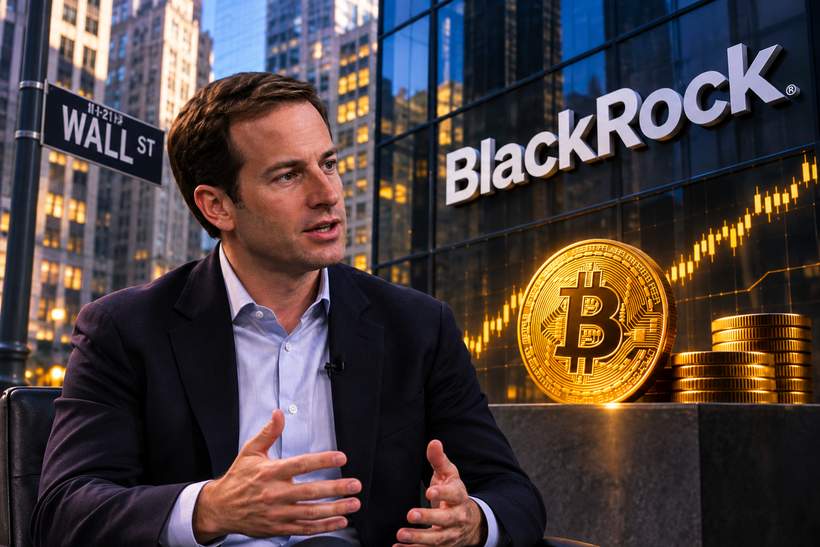
Wall Street’s Crypto “Upgrade” Era
BlackRock’s digital assets lead, Robbie Mitchnick, thinks crypto is slipping into a brand-new phase. The headline vibe? More serious finance folks are walking in like they already know where the spreadsheets live—and bringing real-world experience with them.
And yes, that matters for Bitcoin. Because when big, traditional players show up, it can change how Bitcoin moves through the broader financial system. Basically: the market isn’t just being powered by crypto die-hards anymore.
Bitcoin Is Moving Past “Just a Speculation Thing”
For a while, Bitcoin had a reputation that was… let’s say “high-drama.” You know, the “will it moon today?” energy. But now it’s increasingly accessible through things like exchange-traded funds and other regulated products.
So instead of Bitcoin being a niche, crypto-native playground, it’s becoming something investors can actually slot into their normal routines—like it’s just another line item, not a rollercoaster you’re forced to ride with strangers.
BlackRock’s Role: From First Blockchain Hire to Big Market Player
Mitchnick joined BlackRock back in 2018, when he was the company’s first blockchain-focused employee. Since then, the digital asset world has grown from “small and scrappy” to “huge and multi-trillion-dollar-ish.”
According to Mitchnick, the arrival of seasoned financial professionals is helping crypto businesses build the infrastructure needed to handle bigger investors without everything turning into chaos mode.
More Than Just Bitcoin ETFs
Sure, Bitcoin ETFs are a big deal—but the story doesn’t stop there. BlackRock is also exploring products that don’t just follow Bitcoin’s price. One example is a Bitcoin-focused fund built around options strategies, designed to generate income rather than simply mirror market moves.
That’s a key shift: institutional tools are evolving from “track the price” into “construct a whole strategy.” And that’s how you get more ways for traditional investors to participate without feeling like they’re jumping into the deep end with their ankles still tied together.
Tokenized Finance and Mainstream Systems
Beyond Bitcoin, traditional finance is also playing with tokenized investment products and blockchain-based settlement systems. The goal is simple: represent real-world assets digitally so trading, custody, and operations can run more smoothly.
For Bitcoin, this kind of integration could make access feel less like you need to learn a whole new language just to buy one coin.
What Happens to Bitcoin Volatility When Big Players Arrive?
Here’s the part everyone cares about: volatility. Bitcoin has historically seen wild price swings, often influenced by speculation, leverage, and shifting liquidity.
But if more long-term investors—like pension funds and wealth managers—keep increasing their exposure, the mix of who holds Bitcoin may change. That could influence how the market behaves over time.
Still, let’s not pretend institutions automatically mean “lower volatility, forever.” Big fund flows and broader financial shocks can still knock the market around.
Also, Bitcoin’s relationship with traditional stocks isn’t a simple copy-paste. Its correlation with conventional markets has shifted over time, showing it doesn’t always march in lockstep with the usual financial crowd.
Bitcoin as a Portfolio Diversifier?
BlackRock has also looked at Bitcoin as a potential diversifier in portfolios. The idea is that Bitcoin’s historical return behavior has been meaningfully different from some traditional assets, which could help overall risk-adjusted performance in certain models.
In those studies, the suggested allocation was around 1% to 2%—the kind of range that’s “meaningful, but not reckless.” Of course, past performance doesn’t come with a magical guarantee for the future. It just gives you clues, not prophecy.
Institutions Want Simpler Access (No Private Key Stress)
Another big theme: institutions don’t want the hassle of buying Bitcoin directly and managing private keys like it’s a side quest from a video game. Instead, regulated investment products can plug into existing portfolio management systems.
Mitchnick also noted that some investors who already hold Bitcoin are exploring converting into ETF shares, mainly for operational convenience. And for certain in-kind conversion paths, minimum sizes reportedly dropped dramatically—from around $30 million to about $1 million—making it easier for more players to get involved.
Banks Are Joining the Party Too
It’s not just asset managers. Traditional banks are also building crypto infrastructure, including custody services that make digital assets feel less like an experiment and more like something businesses can safely operate.
Overall, the message is pretty clear: Bitcoin adoption is getting increasingly connected to mainstream financial services, instead of staying trapped in the crypto-native corner.
So… Is This the Next Stage of Crypto Adoption?
Mitchnick’s big takeaway is that the next phase of crypto adoption may depend less on pure speculative hype and more on how well digital assets integrate into established financial systems.
For Bitcoin, that could be a major long-term development.
Of course, bringing in major asset managers doesn’t erase risk. But it can improve infrastructure, widen access, and remove some of the operational and regulatory barriers that used to keep certain investors on the sidelines.
As Wall Street keeps cooking up new crypto products, Bitcoin could become a more familiar piece of institutional portfolios.
The real question isn’t whether traditional finance will participate—it’s how much that participation will reshape the market over time.