Will DeFi Adoption Be Derailed by 2026?
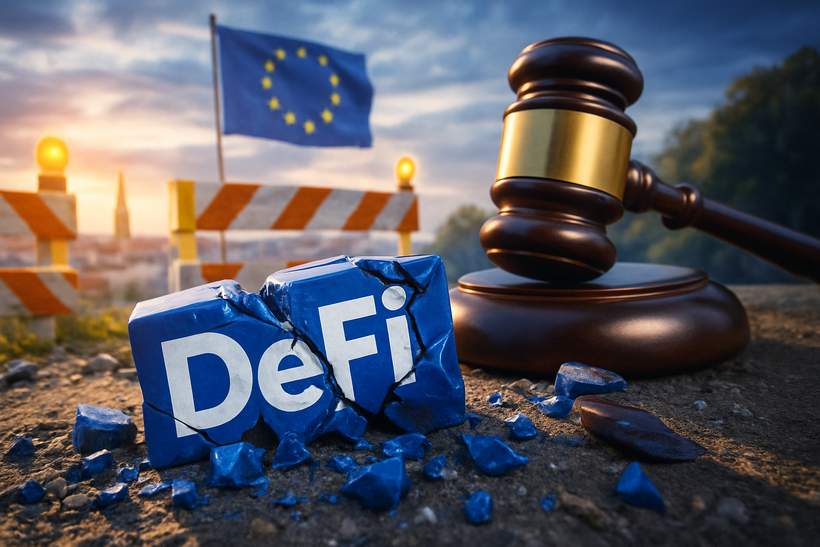
What’s the Deal with MiCA?
Alright, folks, let’s unpack this crypto conundrum coming in hotter than a jalapeño on a summer day! Between late 2025 and good ol’ July 2026, the EU is rolling out their big boss regulation known as MiCA (Markets in Crypto-Assets). This means if you’re involved with crypto exchanges or you’ve got a self-custody wallet, you better be on your best behavior and get that fancy formal authorization to keep playing in the sandbox.
Poland’s Party Pooper Move
Now, here’s a plot twist! Out of the 27 EU member states, Poland’s throwing a wrench in the machinery. President Karol Nawrocki basically hit the brakes on this MiCA-compliant bill, claiming it threatens the freedoms of the Polish people and the state’s stability. Yikes! Now, for this veto to get flipped, the Polish parliament needs to muster a three-fifths majority. Good luck with that!
The Global Ripple Effect
So, with Poland standing firm, one has to wonder: is the global crypto scene about to be hit by a tsunami of regulations that dampen the DeFi party? Remember how the EU introduced the cookie consent creep a few years back? Yeah, that’s the kind of experience we’re talking about here.
What’s Up with Third-Country Quarantine?
Here’s the kicker: MiCA is shunning third-country equivalence, meaning if a crypto whiz from Singapore or the U.S. wants to play nice with EU customers, they gotta set up shop in the EU and beg for permission. The EU is all about shutting down regulatory loopholes and making things tricky for outsiders. This could make implementing DeFi services in the EU feel a lot like a bad game of Red Rover.
CASP or Bust!
For crypto players like Binance or Coinbase, they’re categorized as CASPs (Crypto-Asset Service Providers). This means they can adapt to the MiCA framework without much fuss. But hold your horses! While this CASP status gives them a golden ticket, it also comes with a mountain of fees and reporting headaches. Talk about having your cake and eating it too—just with a side of bureaucratic indigestion!
The Little Guy vs. The Big Players
MiCA seems to be rolling out the red carpet for the deep-pocketed players who can afford the financial acrobatics required to strut their CASP stuff, leaving the little guys in the dust. What happened to the whole point of DeFi being about freedom and no central authority? It’s like going to a buffet and only the rich folks get to eat.
Smart Contracts Under Scrutiny
Now, don’t get too cozy! MiCA has this sneaky clause about allowing exemptions for “fully decentralized” protocols. But good luck proving that! With MiCA hovering like a hawk, there’s a pretty gray area about what counts as a truly decentralized DeFi protocol. Remember Tornado Cash’s run-in with the U.S. Treasury? They couldn’t touch the code, but they can sure mess with the folks using it.
Goodbye, Cookie Consent; Hello, Terms of Service
Fast forward to a potential future where users are smacked with endless “Terms of Service” agreements, or worse—geo-blocks! And what’s that? You might need a VPN to slip through the cracks? Great… except if that VPN is banned in your home turf, you might be digging your own legal grave.
Self-Custody Wallets to the Rescue?
On a brighter note, MiCA isn’t looking to snag self-custody wallet providers like Metamask or Phantom and rope them in as CASPs. Phew! But wait! Enter the Transfer of Funds Regulation (TFR) to rain on this parade. Now self-custody wallets need to keep tabs on fund transfers above €1,000. Cash grab, anyone?
Unity in Disarray
Despite MiCA aiming for regulatory harmony, Poland’s veto proves that the EU is more like an orchestra of cats—lots of noise, but no one’s playing the same tune. Each member state is on its own little adventure with MiCA, implementing it in a way that suits their own rhythm. And let’s be real, the EU’s quest for centralized control is making DeFi innovation about as welcome as a mosquito at a picnic.
Final Thoughts
At the end of the day, MiCA looks more like a defensive maneuver to guard the European economic fortress rather than a blanket of safety for consumers. And while regulators may think they’re putting a leash on DeFi, the underlying tech and philosophy are here to stay—like that one catchy song you just can’t shake off your head. If true DeFi innovation gets the boot, that’s just collateral damage for the EU’s bureaucratic machine. Buckle up, folks; the DeFi rollercoaster is far from over!