Justin Sun Pushes for Court Sanctions Over World Liberty Financial’s Hidden UAE Owners
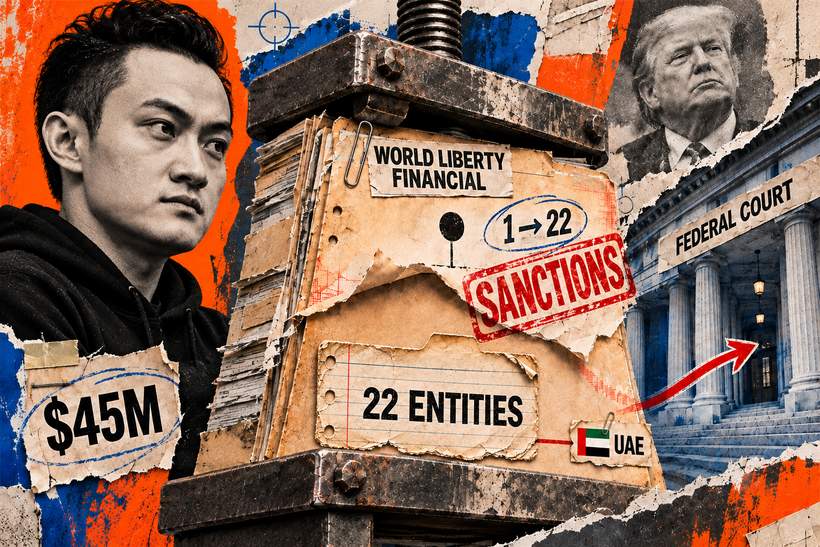
Sun Says World Liberty Waited Too Long to Come Clean
Justin Sun is going nuclear—well, court-nuclear—over what he claims is World Liberty Financial hiding its UAE ties. The Tron founder says the Trump-backed crypto firm didn’t disclose key foreign ownership details until the case had already been rolling for months.
Sun says his lawyers asked a court for sanctions against World Liberty and its attorneys after the company finally revealed connections to the UAE, even though the dispute was already underway over Sun’s $45 million investment.
“American” When Selling Tokens, “UAE” When Backed Into a Corner
Sun’s main complaint is the company’s messaging. He argues World Liberty proudly marketed itself as American—until it needed an escape hatch from an American federal courtroom.
In his words: World Liberty was “American” when it was selling tokens, but suddenly found its UAE roots when it wanted out of federal court.
The Ownership Disclosure Got Bigger—and Faster Than Sun Expected
Things got messy after an August filing, where World Liberty expanded its ownership disclosure from one entity to a whole 22. That list included citizenship tied to Florida, Delaware, Puerto Rico, and the UAE.
Sun says this revision matters because, at the start, the company allegedly only pointed to Florida citizenship, even though the rules required it to spell out the relevant members of its ownership structure.
And to make it extra suspicious, Sun claims the revised filing showed up only about six days after an August 20 hearing about World Liberty trying to move the investor dispute into arbitration.
Arbitration Drama Meets Jurisdiction Reality
Here’s the key legal tension: Sun says the judge indicated some claims should stay in open court, while others could head to arbitration. World Liberty then argued that its UAE citizenship and foreign parties meant the federal court didn’t have jurisdiction.
Meanwhile, Sun says his side has already spent huge money—hundreds of thousands of dollars—fighting the arbitration request.
Why This Feels Bigger Than Just One Lawsuit
This isn’t just nerdy courtroom housekeeping. Sun’s allegations also land in the middle of a wider political mess. World Liberty’s UAE connections have already been under scrutiny due to possible conflicts involving the Trump family and US foreign policy.
The UAE Deal That Sparked Extra Questions
Back in January 2025—just before Trump took office—an investment vehicle backed by UAE National Security Adviser Sheik Tahnoon bin Zayed Al Nahyan reportedly agreed to buy a 49% stake in World Liberty for $500 million.
Reporting tied to the deal suggests that around $187 million was directed toward entities controlled by the Trump family.
Sheik Tahnoon (who’s also the UAE president’s brother) reportedly oversees an investment operation spanning everything from artificial intelligence to advanced technology. That made lawmakers raise eyebrows, especially because the Trump administration had expanded the UAE’s access to advanced US AI chips.
World Liberty denies any suggestion that this investment influenced government decisions. Trump himself has also said he wasn’t aware of the transaction and that his sons run the business.
World Liberty’s “American” Branding, Explained
Even so, the company’s public messaging leans hard into being American. For example, its “Gold Paper” reportedly says the firm isn’t organized offshore and frames itself as a US-based corporation bringing decentralized finance to America.
Sun (and critics) point out that “American” branding doesn’t automatically rule out foreign investment or even foreign citizenship—because a company can be US-based while still having overseas investors. So the big question isn’t whether foreign ownership exists, but whether it was disclosed properly and on time.
Sun Wants the Dispute Back in the Spotlight
Sun says he’s still pushing for the original fight, including claims about fraud and an alleged freezing of tokens. He argues World Liberty either gave its lawyers the wrong information or the lawyers didn’t do the homework needed to uncover the real ownership structure.
World Liberty has rejected Sun’s fraud claims and says he engaged in misconduct in a separate defamation lawsuit.
For now, Sun says he’ll take the original dispute to California state court once the judge rules on his sanctions request—meaning the court will decide whether delayed ownership disclosure deserves penalties for the company, its legal team, or both.