Kraken Bridges kBTC to Chainlink: Making Waves in DeFi
Kraken’s Big Move
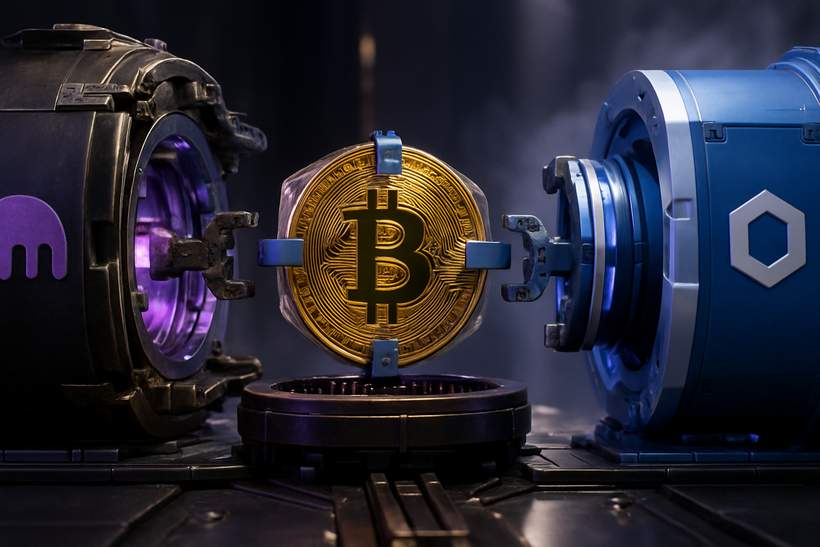
Kraken is shaking things up by moving its wrapped Bitcoin (kBTC) to Chainlink’s Cross-Chain Interoperability Protocol (CCIP). Why, you ask? Because there’s been some serious concern about bridge security in DeFi, and it looks like Kraken isn’t taking any chances!
Why Switch to Chainlink?
In a recent headlining announcement, Kraken revealed it’s ditching its old cross-chain provider. All kBTC transactions will now go through Chainlink. And guess what? This decision isn’t just about keeping up with trends; it’s a vital move in the wrapped-Bitcoin infrastructure puzzle.
The Risky Business of Wrapped Bitcoin
With bridges being scrutinized more than a celebrity’s latest scandal, Kraken’s decision adds a centralized exchange’s twist to the ongoing debate on bridge security. The KelpDAO exploit had everyone in a tizzy, prompting exchanges to rethink their cross-chain strategies. Now, kBTC has to navigate through this risk-ridden landscape too!
What is kBTC, Anyway?
kBTC is Kraken’s special sauce—its 1:1 Bitcoin-backed wrapper that allows Bitcoin to play in the DeFi sandbox. Kraken proudly boasts that kBTC can be utilized across multiple ecosystems like Ink, Unichain, Ethereum, and more. Just imagine taking your Bitcoin out for a spin beyond its native network!
Trust Issues? Not Quite!
Now, here’s where it gets interesting. Kraken’s kBTC builds trust through a few layers of verification, thanks to Kraken Financial and the fact that their Bitcoin is held securely. However, it does mean relying on several moving parts—like custody, smart contracts, and whatever else comes into play. It’s a bit like being in a relationship with a few too many trust issues!
Downsides and Risks
Transparency is key. With great power (or in this case, wrapped Bitcoin) comes great responsibility! Kraken’s whitepaper candidly lists potential risks—think smart contract vulnerabilities, regulatory headaches, and maybe even the occasional blockchain hiccup. They essentially hold all the cards, making it crucial for users to pay attention.
Where Does CCIP Fit In?
So, what’s with CCIP? Chainlink claims it’s the cross-chain standard for both DeFi enthusiasts and institutional players alike. Their promises include decentralized oracle networks and rigorous security checks. After recent security blunders in the crypto sphere, it’s about as trustworthy as a reliable friend who won’t bail on plans last minute.
The Aftermath of KelpDAO
In the aftermath of the hefty exploit that shook the DeFi world, over $3 billion flowed towards Chainlink CCIP. It’s like a rush for safety after a major storm, with many projects enhancing their security infrastructure or just jumping ship altogether.
A Bright Future or More Trouble?
For Kraken, this shift means that they’re setting the tone for how kBTC spreads its wings in DeFi. They want to make sure that the migration empowers users while keeping things above board. The million-dollar question? Will this transition create a more robust and resilient operating model, or is it just a band-aid on a bigger problem?
Final Thoughts
At the end of the day, Kraken isn’t just swapping out a service provider. They’re stepping into a debate on broader wrapped-asset trust issues. As the dust settles, all eyes will be on whether this helps kBTC become a more functional asset in the DeFi realm or if it’s simply rearranging deck chairs on the Titanic. Stay tuned!