Kraken Shifts Wrapped Bitcoin to Chainlink: What’s the Buzz?
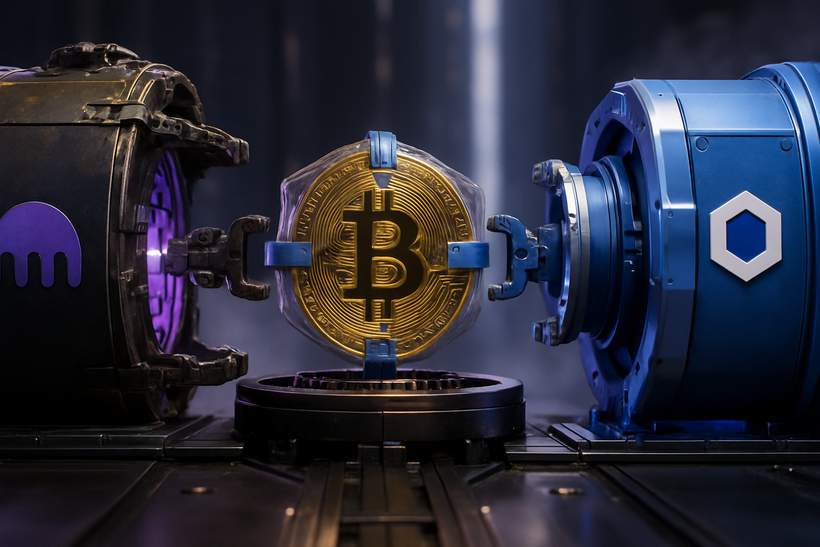
Kraken’s Move: Wrapped Bitcoin Takes a Detour
Hold onto your hats, folks! Kraken just decided to shift its wrapped Bitcoin (that’s kBTC for those in the know) over to Chainlink’s Cross-Chain Interoperability Protocol (CCIP). Why, you ask? Well, it seems like there’s been some serious chit-chat about bridge security in the world of DeFi, and Kraken’s not about to risk it for a biscuit!
Bye-Bye Old Provider
In a recent announcement (that you definitely didn’t miss because it was the talk of the town), Kraken revealed that it’s pulling the plug on its old cross-chain provider. Instead, they’re rolling out the red carpet for Chainlink’s CCIP, which will now be the exclusive home for all Kraken Wrapped Bitcoin and any future wrapped assets. Think of it as a Bitcoin wrapper moving into a posh new apartment!
The Great Migration
With this move, Kraken joins many others who are reassessing their decision on token movements — especially after some drama from the KelpDAO exploit that had everyone biting their nails. This move places the spotlight on how exchange-issued Bitcoin is incorporated into the broader DeFi conversation. So, what’s kBTC again? Well, it’s Kraken’s shiny 1:1 Bitcoin-backed wrapper designed to take Bitcoin beyond its usual stomping grounds.
Trust Factor: More Than Meets the Eye
Kraken insists that kBTC can strut its stuff on platforms like Ink, Unichain, Ethereum, OP Mainnet, and other DeFi ecosystems. Plus, they’re keeping Bitcoin under their watchful eye through Kraken Financial, with all the necessary public reserve and contract links up for your inspection.
But let’s not get too comfy! This trust stack has layers. Users must make a choice involving Kraken’s custody and the safety of the smart contracts, cross-chain messaging, and those destination networks that kBTC is prancing into.
What is CCIP and Why Should You Care?
Now, you might be wondering, what’s this CCIP all about? Chainlink is marketing its CCIP as the ultimate cross-chain standard for DeFi and institutional use. They’re tossing around terms like Cross-Chain Tokens, decentralized oracle networks, and robust security features like ISO 27001 and SOC 2 Type 2. Who knew saving your crypto could sound so fancy?
After some hefty bridge incidents lately, it’s no wonder investors are weighing their options — and Kraken seems to be changing up the infrastructure layer for kBTC to make it a bit more secure.
A Contextual Shift
After the KelpDAO chaos, it became apparent that security configurations matter. And Kraken is stepping into the limelight, deciding how kBTC will work while guiding future wrapped assets toward a more reliable path. But let’s keep it real: just because the bridge is new, it doesn’t magically eliminate all risks.
Signals of Change
Now, here’s the juicy part: what does this mean for the average user? First off, Kraken hasn’t laid out a migration timeline or how it plans to pull this off as they switch to CCIP. For a project that thrives on clarity, this lack of detail is like a bad first date.
Secondly, it’s all about liquidity. For kBTC to shine, Bitcoin needs to make friends in places outside its native turf. If this CCIP switch helps Kraken boost kBTC’s usefulness across different networks while keeping its redemption roots visible, we might be looking at a major win here!
The Verdict: A New Chapter?
So, in conclusion, Kraken is doing more than just changing routes for a token. They’re stepping into the security debate and ensuring their wrapped Bitcoin is part of the safe conversation that’s reshaping DeFi. Whether this move helps clear the waters for BTC distribution or merely shifts the risks remains to be seen. But hey, at least Kraken’s trying to keep things interesting!