Understanding XRP Lending: Why it Can Be Risky for Depositors
The Basics of XRP Lending
So, you’ve dipped your toes into the mysterious waters of XRP lending, huh? This whole lending thing sounds like a breeze at first glance, but boy, hold on to your hats! Because if a loan defaults, your comfy little deposit could face a nasty hit.
What’s the Damage?
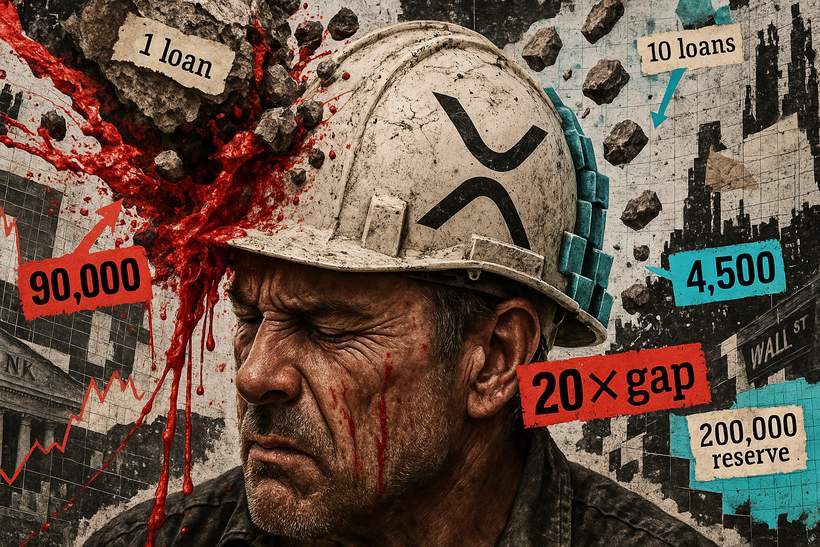
Let’s break it down. Imagine you’ve got a lovely pot of 1 million tokens all lined up and ready to roll. Now, if a big ol’ loan of 100,000 tokens goes belly-up, you might think your losses would be serious but manageable. Wrong! Your share just took a dive, reducing by a whopping 90,000 tokens. Talk about a wallet shrink!
Now, if instead, you had the same 100,000 of bad debt split into ten smaller loans of 10,000 tokens each, the loss only gets slapped down to about 4,500 tokens. Quite the difference, eh? What’s causing this rollercoaster of losses? Well, it all boils down to fancy accounting rules about how reserves are handled and how that affects the depositors.
Cash Reserves: Not All Hope is Lost?
Picture this: there’s a lending design that pools assets in a vault (very vault-y, right?). It serves up fixed-term, uncollateralized loans through a broker that’s basically in charge of underwriting. So, when things go sideways, the money backing those fancy tokens takes a serious hit, and those dear depositors feel the pain.
The rules here are rigid. Loans of different sizes mean different repercussions when it comes to loss coverage. The bigger the loan, the more hungry it is for that reserve! Don’t worry, though, we’ve got charts and numbers to help us figure this out.
Cover Rates and Liquidation Levels
There are three big players that determine how much help you can expect when loans go south: CoverAvailable (the actual cash reserve), CoverRateMinimum (the minimum cover requirement), and CoverRateLiquidation (how much of that minimum cover can take one for the team, i.e., default).
For example, your super broker has 200,000 tokens in reserve but only must keep 100,000 against their massive 1 million debt. If a toxic loan of 100,000 hits the fan, only 10,000 tokens will be covered. And guess what? The remaining vault will suffer a ridiculous 90,000 loss!
Can You Smell the Differences?
This isn’t a one-size-fits-all scenario! Depending on how the loans are structured, splitting that bad debt can lead to significantly lower losses. With nuanced structures, like spreading that 100,000 in smaller chunks, borrowers can avoid hefty losses. No magic here, just smart loan slicing!
If you’re thinking of doing some lending, just know: timing, loan size, and pure luck can change how much can be lost – and trust me, it can be quite a difference! Want to know the kicker? Even little things like the order of defaults matter! It’s like a game of chess where one wrong move leaves you in check!
The Takeaway
In essence, for anyone eyeing the XRP lending space, knowledge is power! Know what you’re getting into: how much cover each loan could draw from reserves during a default is what could save your bacon when things turn shady. Get your calculator ready because understanding all the nitty-gritty of these token trades will keep you from losing a chunk out of your digital pockets!
So, whether you’re into crypto for the cool tech vibes or hoping to cash in on some actual gains, remember this: caution and knowledge are your best pals in the unpredictable world of lending!