Ethereum and Solana: The Battle of Staking Vs. Scarcity
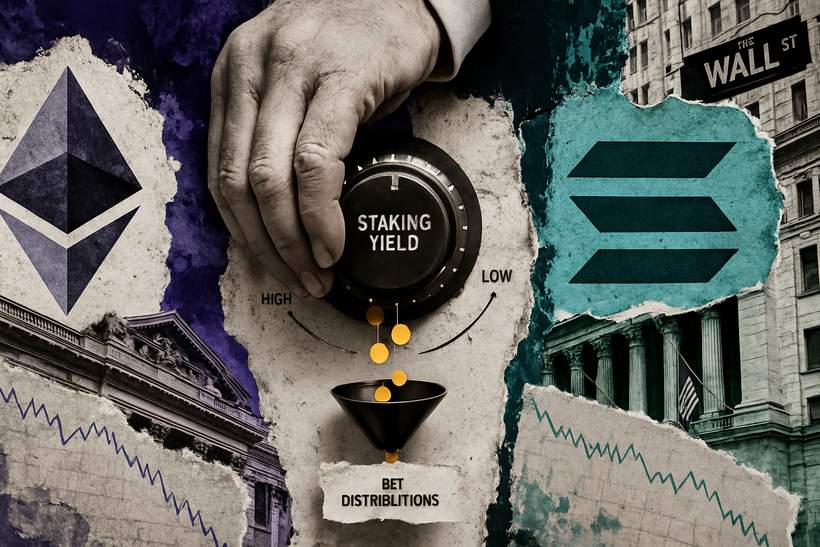
Wall Street, Ethereum, and Solana: A Staking Saga
So, Wall Street decided it was time to turn staking into a fancy dividend, and now Ethereum and Solana are like, “Hey, let’s chop that income down to size!” In a July 17 filing with the SEC, Grayscale announced that their Ethereum and Solana staking ETFs will morph those juicy staking rewards into cold hard cash and dish it out to shareholders at least once every quarter, with this exciting new era kicking off around August 7. Hooray for dividends, right?
Changes Ahead: The Staking Slashing Begins
Now, both Solana and Ethereum are putting the brakes on staking rewards. Solana’s developers are itching to crank up disinflation enough to whittle the staking yield down from the current 5.84% to just 2.25% in the next three years. Meanwhile, Ethereum brainiacs have thrown a draft proposal into the mix, suggesting that a larger slice of validator rewards should just… vanish as more ETH gets staked. Because who doesn’t love watching their rewards disappear?
Cutting Down the Staking Yield
Solana’s plan, dubbed SIMD-0550, wants to double the annual disinflation rate from 15% to a whopping 30%. That means we’ll hit a terminal inflation rate of 1.5% in about 2.8 years, which is much faster than the current snail’s pace of 5.7 years. And with the new changes, the nominal yield would drop from 5.84% to 4.34% in year one, then slide down to 3.00% in year two, and finally land at 2.25% in year three. Wowza! Talk about a rollercoaster for those SOL investors!
Solana: Less Supply, More Scarcity
The upside? Solana’s strategy would ensure that a staggering 18.9 million fewer SOL are minted over six years. That alone boasts a value of around $1.47 billion at today’s price, which is just about nearly $78. But wait, under the current schedule, a wise investor would be reaping about 13.15% return over three years. With the proposed changes, that return dives to approximately 9.89%. Yikes! So, SOL will have to see a roughly 3% price increase over the next three years to keep investors smiling.
Ethereum’s Bet On Burning
Meanwhile, Ethereum is eyeing its own changes with EIP-8363, which proposes burning a rising share of validator yields based on how much ETH gets staked. Once around half of ETH’s total supply is staked, it’s a total burn-out! One savvy proposer even raised a flag, warning that without any reforms, we could see more than 70 million ETH—over 55% of its supply—flooding into staking by January 2028. That’s some serious competition for anyone who has staked their ETH!
The Staking Yield Dilemma
Now, Solana’s approach is packaging staking yields almost like a risk-free investment in its economic model. However, with passive staking casually paying 5.84%, there are still other DeFi options that need to beat that to be attractive. And sudden changes probably would scare some capital away from Solana’s staking, nudging it towards other potential money-making activities.
A Tightrope of Yield and Supply
But hey, both networks are trying something pretty nifty—cutting the native return rate while also tightening token supply. This could be a double-edged sword for investors! If you’re holding Ethereum or Solana without the stake, rejoice! Less dilution means more value in your hands. Both networks will have a harder time advertising their potential once scarcity pushes to the forefront, like the Bitcoin saga.
Questions Looming for Validators
However, Solana’s plan might push some validators into the unprofitable shadow land within the first year, which raises eyebrows for all those involved. Ethereum’s debate is more intense when it comes to small solo validators, who get the short end of the stick because large staking companies can spread their costs thinner across many ETH.
Complicated Times Ahead
Grayscale’s distribution setup means that as protocol-level rewards dwindle, so too does the pot of goodies available for distribution. Ethereum developers clearly pointed out that it’s harder to push through monetary policy changes as more businesses start banking on staking yields. Every one of them—staking protocols, DeFi platforms, and ETF creators—will be keeping a close eye on changes in validator rewards.
The Bull vs Bear Case
Now, the optimistic side of the street thinks that once the market adjusts, the price will embrace scarcity over lost yield, much like Bitcoin has done without offering any yield at all! But the gloomy bears out there? They see lower rewards and panic as their beloved yields take a hit, especially as there’s competition from cash and short-term Treasuries dangling a safer, more appealing carrot. If that happens, they expect staking products to stumble, and the scarcity play could fall flat on its face.
The Bottom Line
In a nutshell, Ethereum and Solana are making some bold moves, betting everything on the allure of scarcity while letting the rewards take a back seat. This gamble could be a wild ride, but who knows—it might just pay off big! Only time will tell if investors believe that scarcity alone can keep the cash flowing!